
Cricket Betting in New Zealand: Markets, Monopoly and What the Odds Actually Cost
 Available in US
Placing a cricket bet from New Zealand looks different from placing one almost anywhere else a New Zealand reader might travel. Since 28 June 2025, TAB NZ and its sister brand Betcha are the only operators lawfully allowed to take racing and sports bets from people in New Zealand — every other sportsbook a reader meets online is, in the eyes of the Department of Internal Affairs, breaking the law by serving them. That single fact reshapes the whole page: the question is not “which of ten bookmakers can I use for cricket” but “what does cricket betting actually look like inside one lawful monopoly, and what do offshore sites cost the punter who goes there anyway?” Everything below is built around that question.

Current as of 30 October 2026. Verified against the Department of Internal Affairs’ public statements on the Racing Industry Amendment Act 2025 and TAB NZ’s published betting rules.
Table of Contents
- What “Cricket Betting in New Zealand” Means in Practice
- Why the Market Looks the Way It Does: Section 74AAA and the TAB NZ Monopoly
- What TAB NZ Takes and What an Offshore Site Cannot Promise
- What It Costs to Bet: The Price Inside the Odds
- What the TAB NZ App and Betcha App Actually Do
- What the Safer-Gambling Tools Actually Cover
- What a New Zealand Punter Sees Offshore: The Ten Brands at a Glance
- How Each Operator Read in This Comparison
- Why “Best Crypto Cricket Betting” Is Not a New Zealand Question
- Cricket Formats and How Each Shapes the Markets
- What a Same Game Multi Costs
- What Bonuses and “Boosted Odds” Are Worth on Cricket
- What In-Play Costs the Punter
- What the Advertisers Cannot Do
- What Tax the Punter Owes
- How to Read the Cricket Betting Markets in New Zealand
- Key Takeaways from This Page
- Frequently Asked Questions
What “Cricket Betting in New Zealand” Means in Practice
Cricket betting in New Zealand means betting with TAB NZ, on markets TAB NZ publishes, under rules TAB NZ sets. The shape of those markets is set by the sport itself before any bookmaker touches it — and that shape is what decides how an odds board reads.
A cricket side has 11 players. Three formats sit on the international menu. Test cricket lasts up to five days, with each team batting twice and a minimum of 90 overs scheduled per day; if neither side wins it is a draw, not a loss for the favourite. One Day Internationals (ODIs) give each side a fixed 50 overs, with a tie possible if scores are level, and a rain-shortened match handed to the Duckworth-Lewis-Stern method usually settles the contest or, if too few overs are bowled (typically below 20), declares it a no result. Twenty20 (T20) compresses everything into 120 legal deliveries per side, four overs per bowler, with a tied match decided by a super over. Each format produces a different kind of bet: an ODI is short enough for in-play markets to feel like momentum, a Test is long enough that a five-day line moves on session rather than over, and a T20 is volatile enough that a single over can swing a price by twenty points.
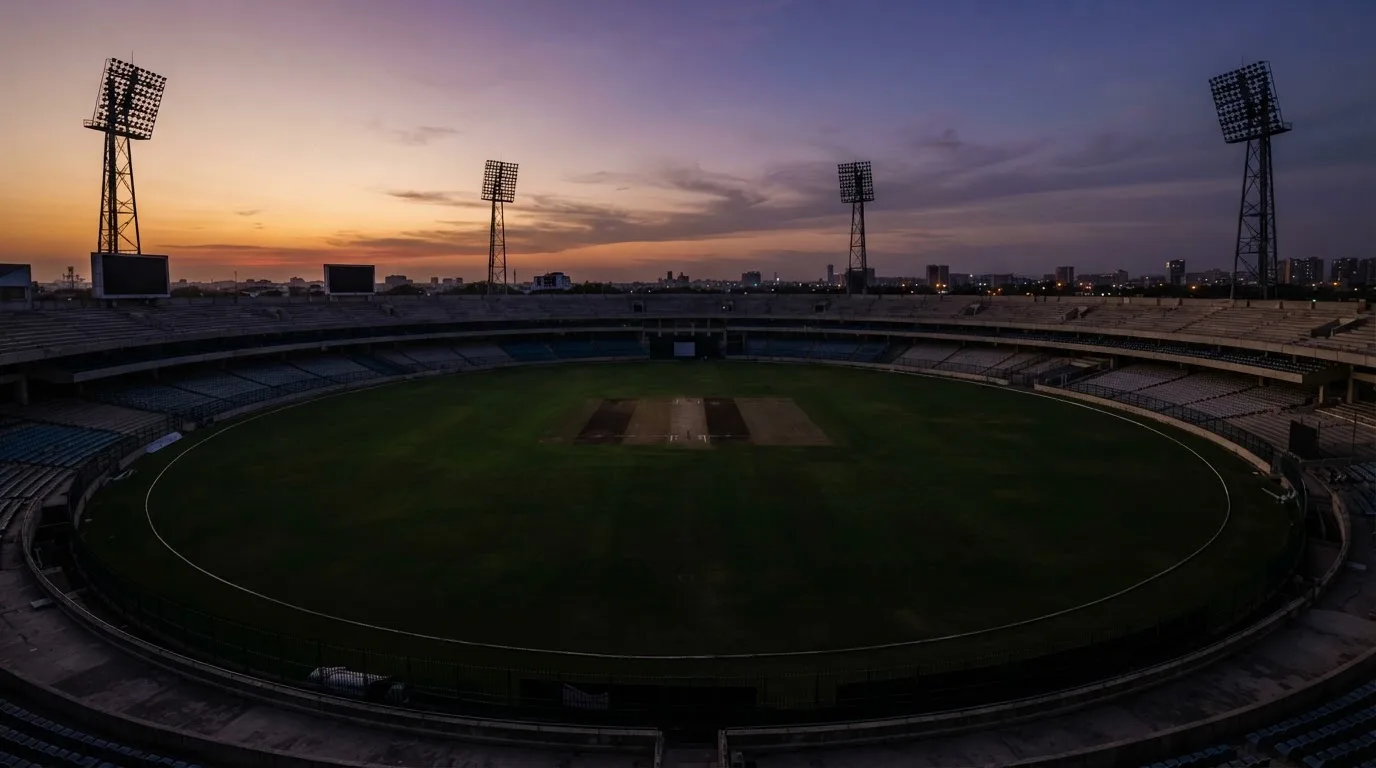
Governance runs through the International Cricket Council (ICC). Twelve Full Members hold Test status; the World Test Championship opened its first season in 2019, and India won the 2026 ICC Men’s T20 World Cup, beating New Zealand by 96 runs in the final after a tournament co-hosted by India and Sri Lanka. Black Caps fixtures sit inside that calendar — bilateral series, the World Test Championship, ICC events, and bilateral T20 internationals — and the TAB NZ card follows whichever cricket is being broadcast.
For a New Zealand punter, the practical question is narrower: which of those formats does TAB NZ price, on what terms, and how does the price compare to the global market? That is the rest of this page.
Why the Market Looks the Way It Does: Section 74AAA and the TAB NZ Monopoly
The monopoly rests on a single clause. The Racing Industry Amendment Act 2025 inserted section 74AAA into the Racing Industry Act 2020: no person other than TAB NZ may offer racing betting, sports betting, or other racing or sports betting to a person in New Zealand, regardless of where that person is resident or incorporated. The change took effect on 28 June 2025; the Department of Internal Affairs told unlicensed providers serving New Zealand to withdraw with immediate effect. There is no licence route for another bookmaker because there is only one lawful provider, and the law does not geo-block offshore websites — it puts liability on the offshore operator.

TAB NZ runs two online brands. TAB at tab.co.nz is the legacy operation; Betcha, first released on 6 August 2024 and published on the New Zealand App Store by Entain New Zealand Limited, is the newer face of the same group. Entain operates the TAB business under a 25-year partnership signed in 2023 that splits gross profit 50/50, guarantees TAB NZ at least $150 million a year for the first five years, and committed a one-off $100 million payment to the racing sector. Crucially, TAB and Betcha are not rivals — they are two doors into one house. They run on one wallet, one account, one self-exclusion register, one set of safer-gambling rules.
What sits outside the monopoly is narrower than the marketing suggests. The Online Casino Gambling Act 2026 licences online casino gambling only — it does not touch sports betting, and TAB NZ’s right to apply for a casino licence does not extend the betting monopoly into casino. From 1 August 2026, greyhound racing closes in stages, and offshore operators may no longer take bets on greyhound races either. Whether esports betting counts as “sports betting” under the Racing Industry Act is not established, and the law is silent on virtual sports delivered through a casino product. Those gaps matter when a punter sees an esports market next to a cricket market on an offshore site and assumes both are equally available in New Zealand — they are not.
What TAB NZ Takes and What an Offshore Site Cannot Promise
TAB NZ takes fixed-odds and tote (parimutuel / pool) bets. Its published betting rules define a familiar racing menu — Win, Place, Each Way, Quinella, Exacta, Trifecta, First Four, Double, Treble, Daily Double, Running Double, Quaddie and Big6 — alongside sports markets including Same Game Multis, where each leg comes from one event. Live betting appears in the TAB and Betcha apps, and no statutory restriction on in-play markets has been established.
Offshore sites promise more. Roobet’s sportsbook lists soccer, basketball, tennis, Counter-Strike, FIFA, baseball, ice hockey, MMA and table tennis. FunBet adds football, ice hockey, American football, basketball, volleyball, tennis, rugby and baseball under a 24/7 banner. Alawin covers football, tennis, table tennis, basketball, ice hockey, American football and baseball with live betting, virtual sports and esports. Golden Panda runs a Sports section beside casino and prediction markets. Glorion groups markets into popular, niche, indoor and outdoor, with horse racing and esports bolted on. LegendPlay offers a Sports tab next to Live Betting and Virtual Sports. Sportaza sells cash out, Bet Builder (where one void leg voids the whole slip), multiples, Asian lines and interval markets in 1, 5, 10 or 15-minute ranges. RoyalistPlay lists live betting, sports promotions, results and a schedule on top of football, basketball, tennis, handball, ice hockey, volleyball and table tennis.
None of that is on offer to a person in New Zealand under section 74AAA. The page lists it because a New Zealand punter is going to see these brands in search results and in app stores, and they are listed because comparing them on the same shelf as TAB NZ makes the legal difference concrete. The same cricket match — a Black Caps ODI against Australia, say — sits at one set of prices on TAB and a different set of prices on a Curaçao-licensed bookmaker where taking the bet from New Zealand is, in DIA’s reading, the operator’s offence. The market breadth is real; the lawful access to it from New Zealand is not.
What It Costs to Bet: The Price Inside the Odds
Every decimal price carries two numbers in one. The headline price is what a winning stake multiplies by; the silent number is the bookmaker’s margin, the slice of every dollar wagered that the bookmaker keeps regardless of who wins. The two are linked: across a market with all outcomes priced, the reciprocal of the sum of the implied probabilities (one divided by each odds) gives the punter’s share of every dollar in honest payouts; subtract that from one and you have the margin. The sharpest way to read an odds board is to do the sum the board already did.
Take an illustrative two-way market — the kind of match-bet line a TAB NZ customer sees on any given match day, with each side at 1.90 in decimal odds. The implied probability of each side is one divided by 1.90, which is roughly 52.6 percent. Add the two implied probabilities together and you get about 105.3 percent. The payout share for the punter is the reciprocal of that sum, roughly 95.0 percent. The margin is one minus that, roughly 5.0 percent. For every $100 staked across this two-way market in equal measure, the bookmaker expects to keep about $5 and pay back about $95 in winnings, whatever the result.
That 5.0 percent is the headline number on a quiet market — the kind a punter sees on the favourite and the underdog priced close to even money. In practice the spread is wider. A heavy mismatch — 1.30 favourite and 3.40 underdog in a Test head-to-head, say — gives an implied 76.9 percent plus 29.4 percent, a payout share of about 94.2 percent and a margin around 5.8 percent. Side markets carry more. Player performance markets, exact over totals, and Same Game Multis typically run between 6 percent and 10 percent margin because the correlations between legs make them harder to price for the punter. The number to look for in any market is not the headline price; it is what the implied probabilities add up to, and the closer that sum is to 100 percent, the less the bookmaker is keeping from that market.
State the result as a band, not a single figure: on a standard two-way cricket match market, the punter’s payout share sits in roughly the 94 to 95 percent region, leaving the bookmaker’s margin in roughly the 5 to 6 percent region; on smaller side markets and Same Game Multis, expect a payout share closer to 90 to 94 percent and a margin closer to 6 to 10 percent. The arithmetic above is a useful summary of the question “how much does betting cost”, and the rest of this page explores the implications for the punter.
What the TAB NZ App and Betcha App Actually Do
A New Zealand punter’s cricket betting takes place inside a tablet or a phone rather than at a counter. TAB NZ publishes “TAB – Racing & Sports Betting” on the New Zealand App Store under the seller name New Zealand Racing Board, with the app first released on 8 September 2014. The store listing notes a 17+ age rating and states that customers must be 18 or over to bet. Inside, the app covers horse and harness racing, rugby union and rugby league and other sports, pre-match and live; Trackside live race streaming sits inside the app with in-app betting, racing form, Blackbook, Jockey Challenge, and a simplified wallet for deposits and withdrawals.
Betcha is the second face of the same group. Published on the New Zealand App Store by Entain New Zealand Limited and first released on 6 August 2024, it carries the same sports catalogue, the same wallet, the same exclusion register. The question of which to use is mostly cosmetic: TAB has the longer history and the racing heritage, Betcha has the newer interface and the same prices.
The interface on both is built around a bet slip, decimal odds in $2.10 form, and a multi tab for combination bets. Live betting is listed inside the app; cricket in-play markets take the same shape they take anywhere — next over runs, next wicket method, fall of next wicket, runs at the end of the powerplay — and the same minimum-stake and minimum-price rules in the betting rules apply. No app can promise a price lock across screen refreshes; on a volatile T20 over, the displayed price can shift between the moment the slip opens and the moment the bet is placed. The punter is not buying a price; the punter is buying a price at the moment the bet is accepted.
What the Safer-Gambling Tools Actually Cover
TAB NZ’s apps include deposit limits, time-outs and self-exclusion, and the exclusion applies across both TAB and Betcha. The free Gambling Helpline (0800 654 655) and the text line at 8006 sit on the same listing; Safer Gambling Aotearoa is the umbrella body. TAB NZ pays a Problem Gambling Levy of 0.74 percent (in force from 1 July 2025 to 30 June 2028), which funds treatment and harm-minimisation services.
What the framework does not cover is as important as what it does. There is no single national online-betting exclusion register; the register the 2026 online casino law will require is for online casinos only. A punter who self-excludes from TAB and Betcha has not excluded themselves from Roobet, FunBet, Alawin, Golden Panda, Glorion, LegendPlay, Sportaza or RoyalistPlay, and none of those offshore brands runs the New Zealand helpline. The DIA warned in 2025 that overseas operators may be in jurisdictions with minimal consumer safeguards, may not return unspent credits, and may not pay out large wins. Exclusion in New Zealand is a monopoly-wide exclusion by design — but only because the monopoly has only one operator; the moment the punter steps offshore, the harm-minimisation framework stops at the border.
What a New Zealand Punter Sees Offshore: The Ten Brands at a Glance
The brands below are the ones a New Zealand punter meets in search results, in app stores and through affiliate links. The first two are TAB NZ’s own faces; the rest are not licensed in New Zealand. Comparison columns are TAB NZ status and what the operator’s own terms say about the cricket key.
| Operator | New Zealand status | Operator’s terms on cricket betting |
|---|---|---|
| TAB | One of two online brands of TAB NZ, the only provider lawfully offering racing and sports betting to people in New Zealand under section 74AAA of the Racing Industry Act 2020 (in force since 28 June 2025) | Fixed-odds and tote betting on racing and sports; Same Game Multis; deposit limits, time-outs and self-exclusion; 18+ |
| Betcha | One of two online brands of TAB NZ, the only provider lawfully offering racing and sports betting to people in New Zealand under section 74AAA of the Racing Industry Act 2020 (in force since 28 June 2025) | Same product set as TAB, including Same Game Multis, live betting and the wallet; 18+ |
| Roobet | Not licensed in New Zealand — only TAB NZ may offer racing and sports betting to people in New Zealand under section 74AAA; Curaçao licence (OGL/2024/687/0427) gives no right to take bets from people in New Zealand | Sportsbook covers soccer, basketball, tennis, Counter-Strike, FIFA, baseball, ice hockey, MMA and table tennis; 18+; cricket coverage not stated on home page |
| FunBet | Not licensed in New Zealand — only TAB NZ may offer racing and sports betting to people in New Zealand under section 74AAA; the brand names no licence that applies in New Zealand | Odds on football, ice hockey, American football, basketball, volleyball, tennis, rugby and baseball; live betting; open 24/7; cricket coverage not stated on home page |
| Alawin | Not licensed in New Zealand — only TAB NZ may offer racing and sports betting to people in New Zealand under section 74AAA; the brand names no licence that applies in New Zealand | Football, tennis, table tennis, basketball, ice hockey, American football and baseball; live betting, virtual sports and esports; cricket coverage not stated on home page |
| Golden Panda | Not licensed in New Zealand — only TAB NZ may offer racing and sports betting to people in New Zealand under section 74AAA; the brand names no licence that applies in New Zealand | Sports, esports and virtual sports next to casino, live casino, crash games, rewards and prediction markets; cricket coverage not stated on home page |
| Glorion | Not licensed in New Zealand — only TAB NZ may offer racing and sports betting to people in New Zealand under section 74AAA; the brand names no licence that applies in New Zealand | Pre-match and live betting, virtual sports, horse racing and esports grouped into popular, niche, indoor and outdoor segments; cricket coverage not stated on home page |
| LegendPlay | Not licensed in New Zealand — only TAB NZ may offer racing and sports betting to people in New Zealand under section 74AAA; Anjouan Gaming Authority licence gives no right to take bets from people in New Zealand | Sports, live betting and virtual sports sections; football, tennis, basketball and ice hockey listed; cricket coverage not stated on home page |
| Sportaza | Not licensed in New Zealand — only TAB NZ may offer racing and sports betting to people in New Zealand under section 74AAA; Anjouan licence (ALSI-202606064-FI2) gives no right to take bets from people in New Zealand | Cash out before settlement, Bet Builder (one void leg voids the slip), multiples, Asian lines, interval markets in 1, 5, 10 or 15-minute ranges; cricket coverage not stated on home page |
| RoyalistPlay | Not licensed in New Zealand — only TAB NZ may offer racing and sports betting to people in New Zealand under section 74AAA; Tobique Gaming Commission e-gaming licence (No. 0000002), holder Novatrix SRL, gives no right to take bets from people in New Zealand | Live betting, promotions, results and schedule; football, basketball, tennis, handball, ice hockey, volleyball and table tennis among top sports; cricket coverage not stated on home page |
The cricket column is mostly empty by design: the operator’s own terms, as published on the home page, do not state cricket coverage for any of the offshore brands above; the punter who wants to know whether a brand prices Black Caps ODIs or the next T20 World Cup has to check the in-app lobby before depositing. The point of the column is that “cricket” is not a generic promise an offshore brand makes — it is a market-by-market question the punter answers themselves at the cashier.
How Each Operator Read in This Comparison
TAB
TAB is the legacy face of the monopoly and the one most older New Zealand punters opened first. The product is the full TAB NZ catalogue — racing, rugby, cricket, the rest of the international sports menu — on the app and on the counter, with Trackside inside the app and Blackbook and Jockey Challenge alongside. The cricket market is whatever the broadcast calendar produces: when the Black Caps play, the market exists; when they don’t, the market shrinks to whatever ICC event is on. The same applies to T20 franchise leagues streamed on partner channels. As a cricket venue TAB is adequate rather than outstanding — the margin on a quiet two-way market sits in the band described above, the in-play markets update within the app’s refresh cycle, and the multi tabs cover the obvious Same Game combinations. Where TAB earns its place is at the seam between the monopoly and the punter: it is the only place a New Zealand punter can have a cricket bet without the operator on the wrong side of section 74AAA.
Betcha
Betcha is the newer face of the same operation, published by Entain New Zealand Limited and first released on 6 August 2024. The interface is built around a quicker bet slip and a more app-native feel than TAB’s, and the cricket offering sits underneath the same data feed as TAB — same prices, same markets, same in-play refresh. As a cricket venue it adds nothing to TAB and saves nothing, but the punter who wants a single-app, single-wallet view of TAB NZ’s product will land here rather than on the legacy app. The exclusion register and the deposit limits run across both brands, so a punter who sets a deposit cap on Betcha has set it on TAB too. The choice between the two is genuinely just a choice of interface.
Roobet
Roobet is the first of the offshore brands on the comparison, and the choice for a New Zealand punter who goes there anyway is the choice to ignore section 74AAA. The sportsbook covers soccer, basketball, tennis, Counter-Strike, FIFA, baseball, ice hockey, MMA and table tennis, with 18+ terms. The licence is Curaçao (OGL/2024/687/0427), held by Raw Entertainment B.V., which gives no right to take bets from people in New Zealand; no New Zealand complaints route reaches the brand, and the New Zealand Gambling Helpline is not a service this operator offers. Cricket is not listed on the home page; the punter has to check the in-app lobby for a market that may or may not exist. As a cricket venue for a New Zealand customer, Roobet is a punt on a Curaçao licence, an unknown cricket depth, and an operator-side offence that the punter chooses not to read.
FunBet
FunBet runs a sportsbook with football, ice hockey, American football, basketball, volleyball, tennis, rugby and baseball under a 24/7 banner, and the brand names no licence that applies in New Zealand. The marketing makes a 24-hour promise; the legal position for a person in New Zealand does not change with the time of day. Cricket is not stated on the home page, so the punter opening an account is opening it on a “check the lobby” basis. Where FunBet stands out is breadth of football markets; for a rugby punter in New Zealand the catalogue looks familiar, but the price the punter sees is not protected by New Zealand consumer law and the margin inside it is the operator’s own number, not one the TAB NZ betting rules cross-check.
Alawin
Alawin lists football, tennis, table tennis, basketball, ice hockey, American football and baseball alongside live betting, virtual sports and esports, with no licence that applies in New Zealand. The virtual sports and esports additions set Alawin apart from a cricket-only reader because the page navigation pulls the punter toward off-pitch markets; the cricket menu is not on the home page. For a New Zealand punter, the calculus is the same as for FunBet: the licence is not a New Zealand licence, the harm-minimisation framework does not reach this operator, and the price is at the operator’s discretion.
Golden Panda
Golden Panda runs a Sports tab next to casino, live casino, crash games, rewards, cashback, a VIP Club, Golden Goals and Prediction Markets. The product is a casino-led site that bolted on a sportsbook, and the licence does not apply in New Zealand. Prediction Markets are the distinguishing feature — they look like opinion markets on real-world events, and whether they sit as “sports betting” under the Racing Industry Act is an unresolved question. Cricket coverage is not stated on the home page. The honest reading is that Golden Panda is a casino first and a sportsbook second, and the New Zealand punter walking in for cricket is entering through the wrong door.
Glorion
Glorion groups markets into popular, niche, indoor and outdoor, with horse racing and esports bolted on. The structure signals an operator chasing breadth rather than depth, and the licence does not apply in New Zealand. Cricket is not stated on the home page. Where Glorion stands apart is the segmentation: a punter opening the lobby sees sports split by audience size and venue type, which makes some hard-to-find markets visible at the cost of a cluttered screen. For a Black Caps punter in New Zealand, the segmentation is a different way of reaching the same answer — cricket may be priced, the operator is offshore, and the punter choosing this site is choosing the segmentation, not a cricket advantage.
LegendPlay
LegendPlay has a Sports tab next to Live Betting and Virtual Sports, with football, tennis, basketball and ice hockey listed and an Anjouan Gaming Authority licence. The licence gives no right to take bets from people in New Zealand. Cricket is not stated on the home page. LegendPlay sits in the middle of the offshore comparison — it has the standard three-tab layout (Sports / Live / Virtual) and the standard esports tie-in, and nothing on the cricket front differentiates it from any other Anjouan-licensed brand. The test for LegendPlay is the same as for the rest of the offshore shelf: the licence does not reach New Zealand, the harm-minimisation framework does not either, and markets must be verified directly at the lobby.
Sportaza
Sportaza offers cash out before settlement, Bet Builder, multiples, Asian lines and interval markets in 1, 5, 10 or 15-minute ranges. The 1-minute interval markets are what set Sportaza apart on a cricket comparison — they pull in-play granularity down to a single over in a T20, which is exactly the resolution a T20 in-play punter wants. The licence is Anjouan (ALSI-202606064-FI2), which gives no right to take bets from people in New Zealand; no New Zealand complaints route reaches the brand. Cricket is not stated on the home page. The appeal of Sportaza’s interval markets is clear, but the brand’s legal position is identical to every other offshore alternative.
RoyalistPlay
RoyalistPlay runs live betting, sports promotions, results and a schedule on top of football, basketball, tennis, handball, ice hockey, volleyball and table tennis, with a Tobique Gaming Commission e-gaming licence (No. 0000002) held by Novatrix SRL. The licence does not apply in New Zealand. Cricket is not on the home page. RoyalistPlay’s distinguishing feature is a “Predictions” section separate from the sportsbook and from esports — which is a different framing of the same market-versus-statement split Sportaza solves with Bet Builder. For a New Zealand punter, RoyalistPlay is one more brand in the offshore shelf; the legal reading is the same, and the cricket markets need to be checked at the cashier.
Why “Best Crypto Cricket Betting” Is Not a New Zealand Question
A reader who searched for “best crypto cricket betting” will land on this page expecting a comparison of crypto-first sportsbooks with a cricket product, and the honest comparison for a New Zealand punter is short: those brands are on the offshore shelf above, none of them is licensed to take cricket bets from New Zealand under section 74AAA, and TAB NZ’s deposit methods are operator-level and come from its own terms rather than from a statutory framework. The crypto angle adds one twist rather than one answer — the offshore brands accept cryptocurrency at the cashier, and the New Zealand punter who walks in via Bitcoin is paying the offshore operator, on an offshore licence, with no New Zealand complaints route, on a cricket market whose depth the home page does not promise.
The angle word on this cluster is “blockchain / pseudonymous / ledger” rather than “anonymity”. New Zealand law does not block Bitcoin at the bookmaker cashier; TAB NZ does not publish a ban on crypto payments because crypto is not its problem — its terms are its terms. The crypto part of a cricket bet is what the offshore brands offer because it suits an offshore business model (no bank intermediary, no chargeback risk, no payment-processor veto), not because it suits a New Zealand punter. The page does not recommend a crypto route because the page does not recommend an offshore route.
Cricket Formats and How Each Shapes the Markets
Test cricket produces the most patient market. A Test head-to-head can sit open for five days, and the price moves on session rather than on over — morning session, afternoon session, end of day, end of match. Side markets cluster around first-innings lead, draw price, and method of dismissal; in-play markets are coarse and slow, and a five-day punter is closer to a tennis punter in pacing than to a T20 punter in volatility.
ODIs sit in the middle. A 50-over match is long enough for a session move to matter and short enough for a partnership to swing a price. The classic ODI market is the head-to-head with a tied-match price, then method-of-dismissal side markets, then over/under totals. Rain is the ODI punter’s recurring problem: the Duckworth-Lewis-Stern method usually settles the contest when overs are lost, and below the minimum-overs threshold (typically 20 overs) the match is a no result and a TAB NZ bet is voided rather than lost. A punter laying the favourite in a rain-threatened ODI is buying a market that may not exist by the time the second innings starts.
T20 is the volatile end. A 20-over match swings hard — a single over can move a price by ten points, and a partnership can bury a head-to-head line inside two overs. Side markets run thick: next over runs, next wicket method, fall of next wicket, runs at the end of the powerplay, top batter, top bowler. Same Game Multis are the T20 punter’s natural product because the correlations between markets (powerplay runs and final total, method of first dismissal and final score) make the legs add up inside the same event.
The tournament calendar is the second axis. Bilateral series produce one-off markets. The World Test Championship and ICC events produce a calendar of group and knockout markets. T20 franchise leagues (IPL, BBL, PSL, CPL, and others) produce compressed markets on a daily basis in the course of their windows. India won the 2026 ICC Men’s T20 World Cup, beating New Zealand by 96 runs in the final; that tournament’s shape — co-hosted by India and Sri Lanka, 20 teams, February to March — is the sort of event that produces the most substantial TAB NZ card.
What a Same Game Multi Costs
A Same Game Multi is the cricket bet type most aggressively pushed by sportsbook marketing, and it is also the one with the highest built-in margin. The arithmetic above gave the punter’s share on a quiet two-way market at roughly 95 percent; on a four-leg Same Game Multi where each leg carries its own margin, the multiplies reduce that share further. The punter is not just paying one bookmaker’s margin four times; the punter is also paying for the correlation between the legs, because legs that are slightly positively correlated (high powerplay score and high match total) reduce the genuine probability below what the multi’s nominal probability suggests.
The question a punter might ask of any Same Game Multi is not “is each leg likely”; it is “what is the implied probability of each leg combined, and what is the book’s payout share on the joined market?” A four-leg multi at 4.00 nominal — each leg roughly 1.68 — gives implied probabilities of about 60 percent each, summing to about 240 percent implied, with a payout share of roughly 42 percent and a margin of roughly 58 percent. That is a worse deal than a single bet at any reasonable leg price, and it is the deal a Same Game Multi multiplies offer the punter by default.
What Bonuses and “Boosted Odds” Are Worth on Cricket
TAB NZ runs “bonus bets” promotions on cricket and on racing; the size and the wagering terms are TAB NZ’s own and the page does not print a code. The honest reading of any bonus bet is the arithmetic of free-bet value: a free bet whose stake is not paid back with a win is worth, on average, the free-bet amount multiplied by (odds minus one) divided by odds, multiplied by the payout share of the market it lands on.
A $10 free bet at odds of 2.00 in a market with a 95 percent payout share is worth roughly $10 multiplied by (2.00 minus 1) divided by 2.00, multiplied by 0.95 — about $4.75 on average, not $10. The punter is paying the bookmaker’s margin and the lost stake, and the “bonus” is real money only in proportion to the odds the punter takes. The arithmetic is the same on offshore brands; the offshore brand may use a smaller free bet or a larger one, may apply minimum-price rules that lock the punter out of the most efficient odds, and may apply wagering requirements that turn a free bet into turnover before it can be withdrawn.
“Boosted odds” promotions sit on the same shelf: the headline price is higher than the regular price, and the question is what the boosted price implies versus the underlying market. A boosted 3.00 from a regular 2.50 has the punter paying for the headline rather than the value; the implied probability drops, and the only way the boosted price beats the regular one is if the regular price itself carried a wide margin. The honest test is to log the regular price, log the boosted price, and compare.
What In-Play Costs the Punter
In-play markets carry wider margins than pre-match markets. The bookmaker’s pricing model updates faster than the punter’s screen on a volatile T20 over, and the wider margin is the price of the live feed. A punter chasing in-play moves needs to be quicker than the feed and sharper than the margin; on a typical in-play market the payout share sits closer to 90 percent than to 95 percent, with a margin closer to 10 percent than to 5 percent. The volatility is not the punter’s edge; the volatility is the bookmaker’s edge.
Cash out is the inverse of in-play. Cash out locks in a position at a price the bookmaker quotes, and the bookmaker’s quoted price carries a wider margin than the underlying market because the bookmaker is taking the other side of the punter’s live position. Sportaza offers cash out before an event or market is finalised; the question for a punter is whether the cash-out price is better than the alternative of holding the position to settlement. On a Same Game Multi where one leg has already won, cash out is a partial payout at the bookmaker’s margin; the punter is paying for the certainty, and the certainty costs more than the headline suggests.
What the Advertisers Cannot Do
The Advertising Standards Authority’s Gambling Advertising Code applies to cricket betting ads. Ads must not target children (under 14) or young people (14 to under 18), judged by context, appeal and expected audience (25 percent or more of the audience counts as significant where accurate data exists). Ads must not encourage gambling harm, and must be truthful with terms available. No New Zealand equivalent of a “whistle-to-whistle” ban for betting was found — the cricket schedule can carry a betting advertisement throughout a Test session. The framework matters because the only betting advertisements a New Zealand punter sees lawfully are TAB NZ ads and ads carrying the ASA’s standards; the offshore brands run their ads outside the code.
What Tax the Punter Owes
Inland Revenue guidance says recreational gambling winnings are generally not taxable, and prize money from TAB horse, dog and trotting races is not taxable. A person who bets as a business is a different case and may consult Inland Revenue or an accountant. The offshore operator pays online gambling duty (12 percent of profits since 1 July 2024, rising to 16 percent from 1 January 2027) where the operator supplies New Zealand residents, but a duty being payable is not the same as the offer being lawful under section 74AAA — and the page never writes that tax payment shows a bookmaker is legal. The point-of-consumption charge on offshore racing and sports bets ceased on 30 June 2026.
How to Read the Cricket Betting Markets in New Zealand
A cricket bet in New Zealand sits inside the monopoly and the limits that come with it. The flow is the same as a TAB NZ bet anywhere on the app: open the app, choose a market, set a stake, confirm the bet. The price the punter sees is the price at the moment of placement, and the price moves between screens on a live market. A punter who wants a price lock has to use the betslip and place the bet inside the displayed price window; a punter who wants the live price has to refresh the betslip. The exclusion register and the deposit limits apply across both TAB and Betcha, and the wallet is shared.
The honest read for a New Zealand punter is that “cricket betting in New Zealand” means TAB NZ and Betcha, and that the offshore brands meet a New Zealand punter in search results and app stores without meeting them in the lawful market. The arithmetic inside the odds holds regardless of which operator the punter sees it on; the harm-minimisation framework holds only inside the monopoly.
Key Takeaways from This Page
The headline numbers on cricket betting in New Zealand are section 74AAA and the margin. Section 74AAA is the reason TAB NZ and Betcha are the only lawful routes for a New Zealand cricket punter; the offshore brands on the comparison are a comparison the page runs for the reader’s information, not a route the page opens for the reader to walk down. The margin is the price the punter pays on every market, and reading the odds board for the implied probability rather than the headline price is the punter’s only defence against it. The format and the tournament calendar shape what the markets look like; the safer-gambling tools shape what a punter can do to themselves before they make the bet; the tax treatment shapes what the punter owes after the bet is settled. Everything else on the page is built around those four points.
Frequently Asked Questions
How does betting work in cricket?
A cricket bet is a contract between the punter and TAB NZ (or Betcha) that pays out at the displayed decimal odds if the chosen selection wins, ties or places per the betting rule. The punter sets a stake, the bet is registered on the betslip, and the payout is the stake multiplied by the odds; the stake itself is paid back with the winnings. Cricket markets are organised by match (head-to-head, tied match, draw in Tests), by innings (first-innings lead, method of first dismissal), by over (runs in the next over, runs at the end of the powerplay) and by event (top batter, top bowler, player of the match).
How is the return on a cricket bet worked out from the stake and the odds?
A winning cricket bet pays back the stake plus a profit equal to the stake multiplied by (decimal odds minus one). A $10 stake at odds of 2.50 returns $25 in profit plus the original $10 stake, for a total of $35 back. A combination bet multiplies the odds of each leg together to give one combined price before the same stake-times-odds rule is applied. Recreational gambling winnings are generally not taxable in New Zealand; a punter betting as a business is a different case.
What is the bookmaker’s margin and how does it show up in the odds?
The bookmaker’s margin is the share of every dollar wagered across a market that the bookmaker keeps on average, regardless of who wins. It shows up as a sum of implied probabilities above 100 percent: one divided by each decimal odds, summed across all outcomes of a market. A two-way market at 1.90 and 1.90 sums to about 105 percent implied, giving a payout share of about 95 percent and a margin of about 5 percent. Wider margins sit in side markets and Same Game Multis.
Which bookmaker may lawfully take sports and racing bets from people in New Zealand?
TAB NZ and its online brand Betcha are the only operators lawfully allowed to take racing and sports bets from people in New Zealand, under section 74AAA of the Racing Industry Act 2020 (in force since 28 June 2025). Entain operates the business under a 25-year partnership signed in 2023. The Department of Internal Affairs told unlicensed providers serving New Zealand to withdraw with immediate effect, and there is no licence route for another bookmaker.
What does TAB NZ’s safer-gambling framework cover?
TAB NZ’s apps include deposit limits, time-outs and self-exclusion, and the exclusion applies across TAB and Betcha. The free Gambling Helpline (0800 654 655) and the text line at 8006 are listed in the app. TAB NZ pays a Problem Gambling Levy of 0.74 percent from 1 July 2025 to 30 June 2028. There is no single national online-betting exclusion register; the register the 2026 online casino law will require is for online casinos only, so a punter who excludes from TAB and Betcha has not excluded from offshore brands.
Created by the ”Nzbettinglaw” editorial team.
